STORM AND HAIL DAMAGE
After the storm, document first. Decide second.
A hard hail night over Wichita leaves two kinds of damage: the kind you can see from the yard, and the kind that shortens your roof's life quietly. Chisholm Roofing Co handles the second kind properly. The crew reads the roof slope by slope, photographs what the storm did, and gives you a written scope and a set of dated pictures that are yours to keep, whatever you decide next. That order, evidence first and decisions second, is the whole service. The inspection is free, hassle-free, and no-obligation, and in a storm week, calls are worked in the order they came in.
What a Kansas storm actually does to a roof
Hail bruising
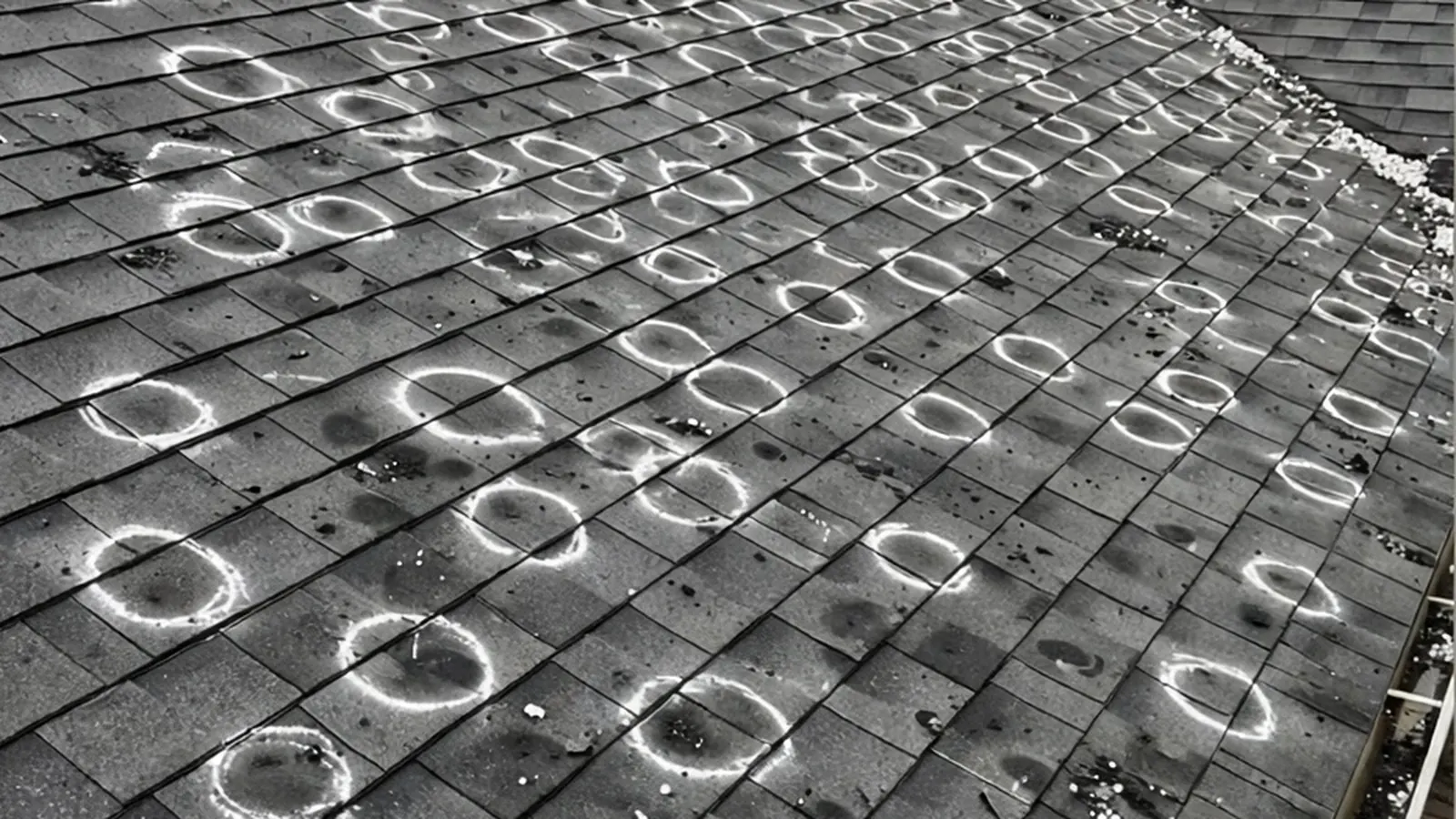
A hailstone does not have to break a shingle open to damage it. A hard hit crushes the granules into the asphalt mat and fractures the mat itself, and that spot then ages years faster than the roof around it, shedding granules and opening to the sun. Bruising is read on the roof, by photograph and by feel, in a pattern across a slope. One mark proves little; a slope-wide pattern tells the storm's story. The National Weather Service counts hail of one inch or larger as severe, and Kansas sees most of its hail from April through July, peaking in May.
Wind lift and creasing
Wind gets under shingle edges, breaks the sealant bond, and folds tabs back until they crease. A creased tab rarely seals again, and the next storm works it harder. Wind damage concentrates where the wind does: the edges, the ridges, and the slope that faced the storm, which is why a storm inspection reads slopes individually instead of giving the whole roof one verdict.
Driven rain at the details
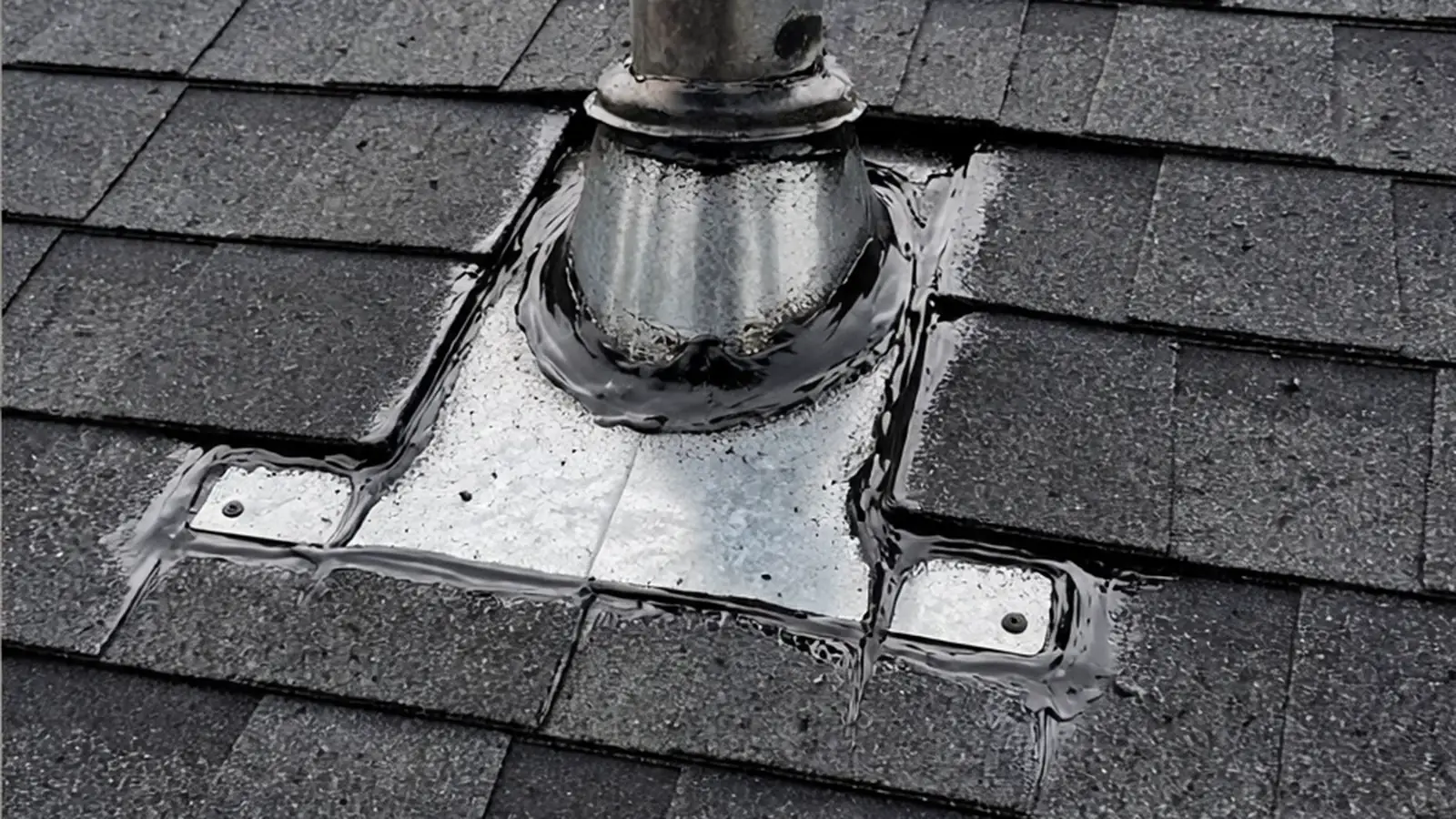
A storm tests the parts a calm rain never reaches: flashing lines, valley joints, vent boots, and the uphill side of every penetration. Plenty of Wichita leaks are storm leaks in this sense: the weakness was there for years, and one sideways rain found it. Those repairs belong to the repair page as much as to this one, and the inspection will sort which conversation yours is.
Debris and impact
Branches, blown objects, and the occasional trampoline arrive with Kansas wind. Impact damage is the most visible kind and the easiest to document, and it is worth photographing before anything is moved, exactly as it landed, with the date attached.
What storm work typically runs in Wichita
Budgeting numbers again, not a quote: your price is set from your roof, after the inspection, and storm scope varies more than any other kind.
| Storm work | Typical range | Notes |
|---|---|---|
| Hail spot repair or patch | $300 to $900 | For limited, localized bruising |
| Missing or wind-blown shingles | $175 to $450 | Per repair area |
| Active leak repair after a storm | $275 to $700 | At the entry point, not the stain |
| Flashing repair at storm-opened joints | $400 to $1,100 | Chimney, wall, and valley lines |
| Most storm repairs | $200 to $1,500 | The general Wichita repair band |
When storm damage is spread across every slope, the conversation may move to replacement planning. A full replacement on a typical Wichita home typically runs $9,000 to $19,500 depending on size, pitch, and material. That is a planning range from local published figures, not a number for your house, and nobody should hand you a firmer one before reading your roof.
The documentation habit, and why it comes first
Ellis started photographing roofs because framing taught him to trust his eyes over descriptions. Storm work is where that habit earns its keep, because after a storm, everyone in Wichita has an opinion about your roof and most of them were formed from the ground.
A useful storm record has four parts, and you can start it yourself before we arrive. First, the storm itself: date, time, and hail size against a coin or tape measure, photographed in your yard. Second, the ground evidence: shingles, debris, dented gutters and vents. Third, the roof itself: dated, close photographs of the bruising pattern, the lifted tabs, the flashing, slope by slope. Fourth, a written scope that separates what the storm did from what age was already doing. That last separation matters more than homeowners expect. A record that honestly divides storm damage from wear is a record that stays credible with everyone who reads it later, including you.
Storms, insurers, and what a roofer can and cannot do
This part is written plainly because storm season fills Wichita with promises it should not.
A roofer can inspect your roof, document what a storm did to it, explain the damage in ordinary language, and repair what you decide to repair. A homeowner can take that documentation to their own insurer and follow their policy's process, and many do. What no roofer can do is promise what an insurer will decide. Coverage, deductibles, and outcomes live in your policy and your insurer's judgment, not in a contractor's pitch, and a company that guarantees you a claim result is guaranteeing something it does not control.
So the guidance on this page is process guidance, the kind that holds up whoever you hire. Document early, while the evidence is fresh. Know your deductible before you decide anything, because a repair smaller than a deductible is simply a repair. Get the inspection and the repair number first, and let arithmetic, not adrenaline, make the call. And keep copies of everything: photographs, dates, and the written scope. They are yours.
Why homeowners bring us their storm calls
Slope by slope, not one verdict for the whole roof
Storms do not damage roofs evenly, and a verdict that treats yours as one surface is a shortcut. Each slope gets read and photographed on its own, so a sound north slope is called sound and a bruised west slope gets the attention. Accuracy here is what makes the record useful.
Storm damage and old age, kept separate
The written scope divides what this storm did from what the last fifteen years did. Homeowners deserve that honesty, and it protects you: a record that claims everything is storm damage convinces nobody, while a record that separates the two is the kind people act on.
Photographs you keep, whatever you decide
The inspection set is yours: dated, close, and organized by slope. Use it to decide, to talk with your insurer, or to get a second opinion from another company. Evidence that only works if you hire us would not be evidence. It would be leverage, and we do not build it that way.
A list kept in order when the whole city is calling
After a major hail night, Wichita's roofing phones ring for weeks. Our storm list is worked in the order calls came in, Tess will tell you where you stand on it, and the list stays local: this metro, these towns, roofs we can actually reach and read carefully.
How a storm call goes
- You document, then call. Ground photographs with dates, hail beside a coin if you can do it safely, then call Call for same-day help or send the estimate form. Tell Tess when the storm passed over your street.
- The roof gets read slope by slope. Bruising patterns, lifted and creased tabs, flashing and boots, and the deck's feel at the edges. The storm's work gets separated from age's work as we go.
- You receive the record. Dated photographs and a written scope, with the repair number for the work the storm actually did. What you do with the record is your call.
- Repairs proceed at your pace. Approve the repair and it gets done and photographed. Prefer to plan first? The record keeps, and the numbers stay on the table for the conversation.
Storm seasons in Wichita
Kansas hail runs April through July and peaks in May, which makes late winter the smart season for a roof check if yours is aging, and makes the weeks after a spring storm the busiest in this trade. Fall is not exempt: the National Weather Service's Wichita office lists significant hail events in September in recent years, so a roof that took spring damage unrepaired meets the fall storms already weakened. The towns around Wichita take the same sky, sometimes harder: a cell that clips the city can sit over Derby or sit over Cheney at full strength, which is why each town on the service areas page gets its own page rather than a line in this one.
Storm questions
How soon after a storm should the roof be looked at?
Within days, if you can. Hail evidence stays readable for a long while, but the surrounding record does not: debris gets cleared, gutters get cleaned, and the storm's date blurs into the season. If water is coming in, that is not a documentation question at all. Call and say so, and the leak moves up the list.
Can hail damage a roof without leaking?
Yes, and that is its usual trick. Bruising fractures the shingle mat without opening it, so the roof sheds water this year and ages fast at every bruise. The failure arrives seasons later, as granule loss and cracking at the hit points. That delay is exactly why the inspection happens after the storm rather than after the stain.
My neighbor is getting a whole new roof. Does that mean I need one?
It means your neighbor's roof, age, policy, and damage added up that way. Streets do share storms, and neighboring roofs of the same age are worth inspecting when one is found damaged, but the answer lives on your slopes, in your photographs, not across the fence.
Should I get on the roof myself to take pictures?
Please do not. A storm-worked roof can have lifted, slick, or weakened spots, and the ground record (hail, debris, gutters) is the part that needs your camera. The roof photographs need a roofer's feet and a roofer's care on a ladder: leave that layer to the crew, whoever you hire.
What if the damage is smaller than my deductible?
Then it is a repair, plain and simple, and a common one: plenty of Wichita storm work lands in the few-hundred-dollar range, well inside most deductibles. Knowing the repair number before any other conversation is what turns that from a worry into arithmetic.
Storm come through your street? Call for same-day help or start with the free estimate. Document first, decide second.