OUR MAIN SERVICE
Roof repair in Wichita, diagnosed from the deck up
Chips: Active leaks · Missing shingles · Flashing · Vent boots · Valleys
A roof rarely fails all at once. It fails at one boot, one flashing line, one valley, and then water does the rest, indoors, on its own schedule. Chisholm Roofing Co is a small Wichita repair crew led by a former framing carpenter, and the framing matters here: Ellis Brandt spent fourteen years building the structures roofs sit on, so the crew reads a leak the way a builder reads it, layer by layer, instead of patching the spot above the stain and hoping. Call, and Tess will get the story of what you are seeing; most Wichita calls are seen the same day or the next. The inspection ends with photographs from your roof and the full price before any repair begins. Start with a free, no-obligation inspection.
The failures we see every week
A leak that shows up indoors
The stain is the last chapter, not the first. Water enters at a small failure, travels along decking or a rafter, and appears where the ceiling lets it. The repair belongs at the entry point, which is why this crew starts above the stain and works outward along the slope, reading boots, valleys, flashing, and nail lines until the path makes sense. A repair aimed at the stain's location alone is a coin toss.
Shingles missing or lifted
Kansas wind works a roof edge by edge. A shingle torn off in a March gust is a small job; the lifted tabs around it are the rest of the story, since a tab that has lost its seal will keep lifting until it creases, cracks, or follows the first one into the yard. After a windy night, walk your property line and look at what came down: the color and thickness of the debris say a lot about the age of what is still up there.
Flashing that has opened up
Flashing is the folded metal that keeps water honest where a roof meets something else: a chimney, a wall, a vent stack, the two slopes of a valley. Wichita's temperature swings work those joints every season, and sealant alone is a short answer to a metal problem. Flashing trouble usually announces itself as a leak that appears in hard rain and hides in gentle rain, because driven water reaches the gap that falling water misses.
Vent boots cracked by the sun
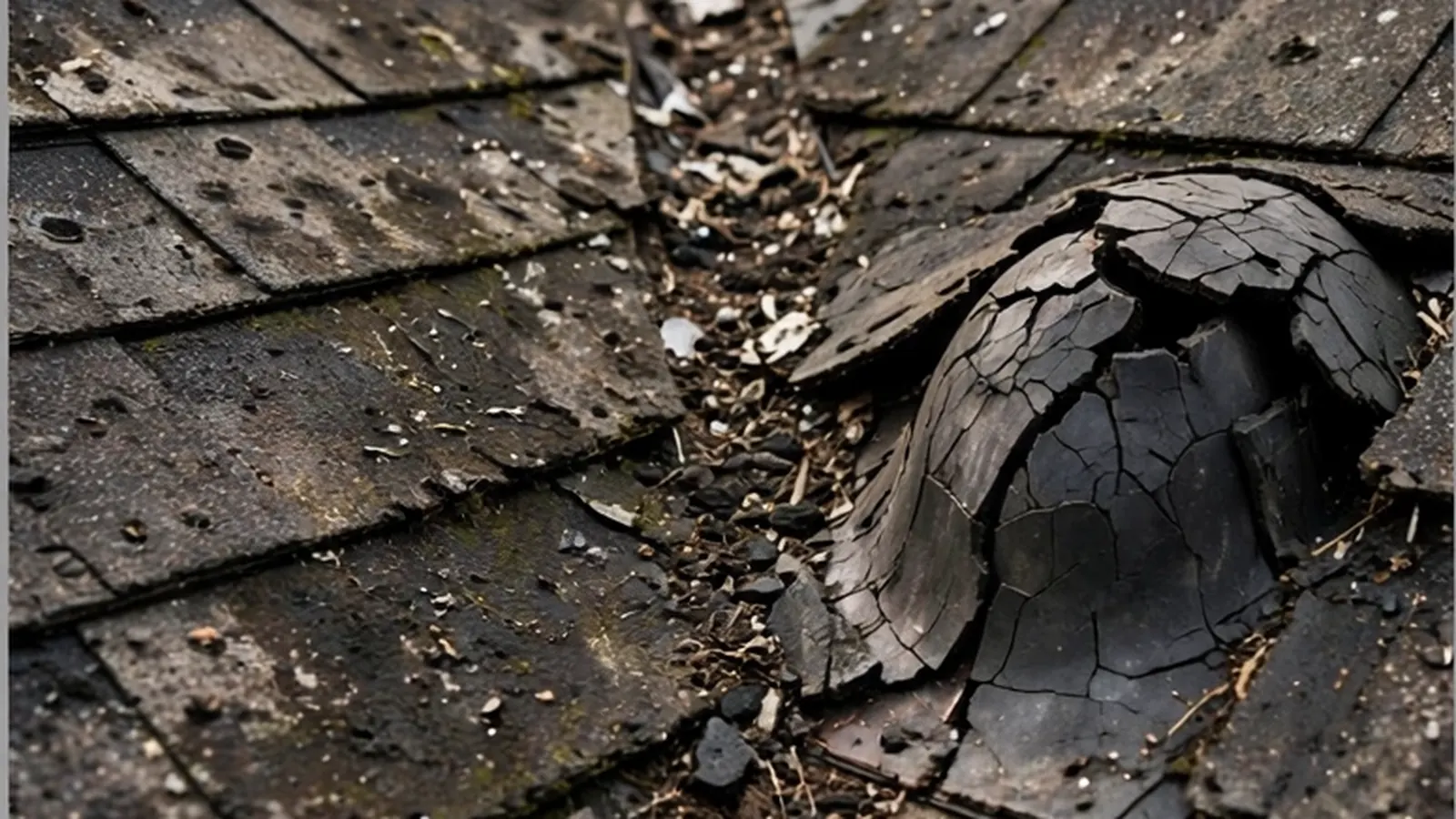
The rubber boot around a plumbing vent lives the hardest life on a Wichita roof: full sun, summer heat, winter cold, and it cracks years before the shingles around it wear out. A cracked boot is one of the most common leak sources in the metro and one of the smallest repairs, which is exactly why it is worth photographing: small cause, clear fix, no mystery.
Valleys carrying water wrong
A valley concentrates everything two slopes collect into one channel, and it is built, or misbuilt, at framing and decking level. Debris dams, worn valley metal, and shingles cut too tight all show up here first. Valley leaks tend to be generous, and they reward the framer's habit of asking what the water is being asked to do.
A roof that is telling you its age
Granules in the gutters by the handful, shingles curling at the corners, patches from three different decades living side by side: at some point the honest conversation stops being about the next repair. That point is read on the roof, not guessed from a birthday, and when we reach it we will show you the photographs that say so and talk planning numbers instead of repairs.
What roof repair typically runs in Wichita
Use this table to budget. These are planning numbers, not a quote, and the table cannot see your roof from here. Your price comes after the inspection, covers the whole job, and is yours to accept or turn down before any work starts.
| Repair | Typical range | Usual time |
|---|---|---|
| Missing or wind-blown shingles | $175 to $450 | A few hours |
| Active leak repair | $275 to $700 | Half a day |
| Hail spot repair or patch | $300 to $900 | Half a day |
| Flashing repair, chimney, wall, or valley | $400 to $1,100 | Half a day |
| Most other repairs | $200 to $1,500 | Varies |
Why the ranges are wide: Wichita hangs everything from a low ranch roof you could nearly step onto to a steep two-story College Hill pitch with three layers of history on it, and a repair is priced by access, pitch, and what the layers underneath turn out to be. Ask any company quoting you, us included, what the price assumes about the decking under the work. That answer tells you whether the number was read off your roof or off a rate card.
Think of the roof as a stack that sheds water downhill
Fourteen framing years taught Ellis to describe a roof the way it is built, from the bottom up. Decking is the floor of the roof, the surface everything else fastens to. Underlayment is the second skin, the layer that keeps a small failure upstairs from becoming a wet ceiling. Flashing handles every joint and interruption. The shingles on top are the weather face, and they are, honestly, the layer most likely to be blamed for the other three.
Most leaks are a handoff failure between layers. A boot cracks, water reaches the underlayment, the underlayment has its own old nail hole, and the decking moves the water sideways to a ceiling seam. That is why the first question on our calls is never "how big is the stain," it is "what is the roof doing above it." When you describe your roof's trouble to any company, describe the timing: which rains bring it, which wind direction, how long the roof takes to dry after. You will get a straighter diagnosis for it.
Why this crew, for this job
You see the failure before you fund the fix
The inspection photographs are the diagnosis: the cracked boot in close up, the flashing gap, the bruising pattern. A price attached to evidence you can hold is a price you can judge. Ask to see it from the roof, not from the driveway, from us or from anyone.
The price question, asked of the deck
Before you approve a repair, ask what it assumes about the decking under the work area. Soft decking changes a small job honestly, and hearing that possibility in advance, with a range for it, beats discovering it as a surprise. It is the question a framer asks first, and it protects you with every company.
A repair scoped to the layer that failed
Patching the surface above a valley problem buys a season. The scope here follows the water's actual path, even when that means the written repair is one layer deeper than the one you can see from the yard. The photographs will show you why.
An active leak goes first
Tell Tess if water is coming in now. A bucket under a drip is a day going sideways, and the schedule bends for it. That is a routing decision we are glad to make.
How a repair call goes
- You describe what you are seeing. Call Call for same-day help or send the estimate form: the stain, the drip, the shingles in the yard, and which rains bring it. Tess books the window.
- The roof gets read as a stack. Decking edges, underlayment clues, flashing, boots, valleys, and the slope above your stain, because the loudest symptom is not always the entry point. (Ask this of any roofer, us included.)
- You see the photographs and hear the price. Diagnosis first, in pictures, then the full price, then you decide. Take it, trim it, or leave it.
- The repair is photographed too. When the work is done, the same spots get photographed again, so what changed is as visible as what failed.
Wichita roofs, and how they age
The city's roofs age in three accents. Near the rivers and in College Hill, the early houses carry steep pitches, layered histories, and details like chimneys and dormers that make flashing the main character. The postwar middle ring is ranch country: lower pitches, long simple slopes, and vent boots and valley metal reaching their years together. The outer subdivisions carry big modern roofs installed street by street, which means a whole street's roofs take the same hail seasons and reach the same age in the same few years. Local detail for each town around Wichita is on the service areas page.
Repair questions
My roof only leaks in hard rain. Small problem or big one?
Usually a specific one. Hard, wind-driven rain reaches openings that gentle rain passes: the uphill side of a flashing line, a valley under load, lifted shingle edges. That pattern is good news for diagnosis, because it rules out whole categories of failure before anyone climbs. Note the wind direction when it happens and tell us.
Can shingles from a repair be matched to the rest of the roof?
Often closely, rarely perfectly. Shingles fade in the Kansas sun, so a new bundle on a twelve-year-old slope will read as a patch for a season or two, even in the same color. Anyone who tells you a repair on an older roof will be invisible is selling. Ask to see a sample held against your slope before you decide the size of the repair area.
The decking under a spot feels soft. What does that change?
Soft decking means water has been visiting that spot for a while, and it changes a surface repair into a structural one in that area: the failed deck section has to be sound before new material over it means anything. It is the finding Ellis's framing years make him most stubborn about, because covering soft decking is how a small repair becomes next year's bigger one.
How do I know the leak is fixed and not just quiet?
A repaired leak proves itself in weather, not in words. After the repair, watch the ceiling through the next two or three hard rains from the same direction that used to bring the drip. If a stain grows or a drip returns, call while the trail is fresh: a leak that persists after a repair is information about the water's real path, and it should be chased, not debated.
Is it worth repairing a roof this old?
Depends what the roof itself says. A twenty-year-old roof with sound decking and one failed valley is a repair. The same age with granules gone across every slope and decking soft at every edge is a planning conversation. Age starts the question; the photographs settle it.
Water finding its way in? Call for same-day help or start with the free estimate. Most Wichita repair calls are seen the same day or the next.